
Immutable versioning
A complete, immutable history of models and data
trac enforces immutable versioning of both models and data. Models are versioned through your existing source control, while data is stored using an append-only model in your native object storage.
Every calculation references fixed versions of all inputs — ensuring results can be reproduced exactly.
Contract-based execution
Calculations as independent governed artefacts
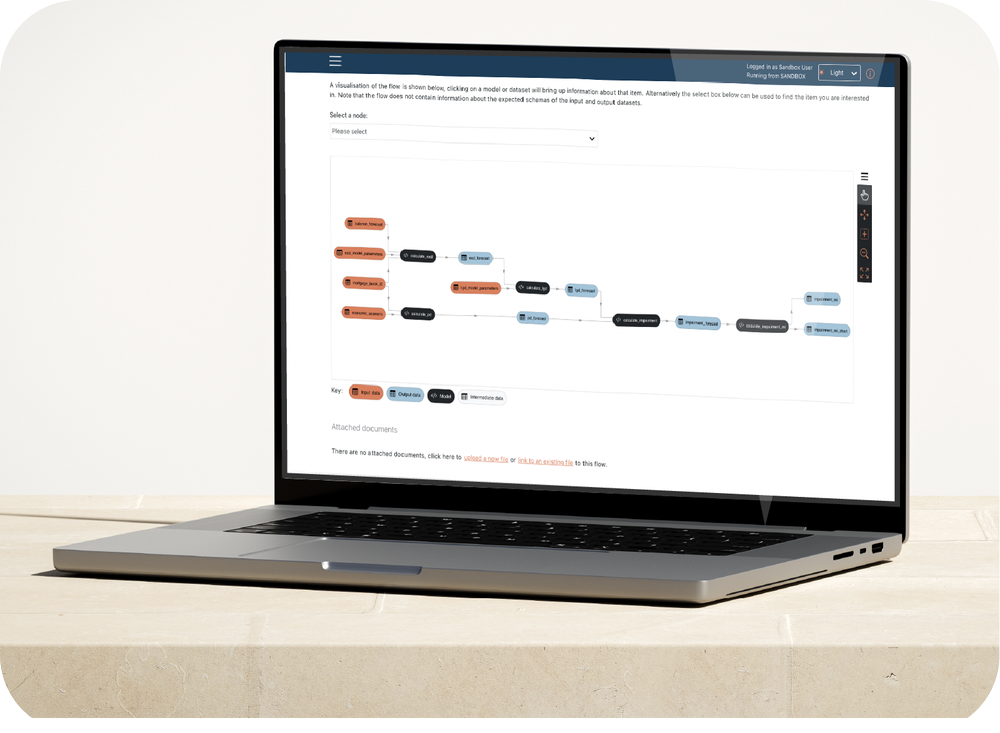
In trac calculations are represented via a single controlled metadata object - a calculation contract - which drives execution and persists as the authoritative record of what was run.
Execution does not dependend on mutable pipelines or environment configuration, so every calculation is documented and repeatable.

Automated documentation
Eliminating manual evidence production
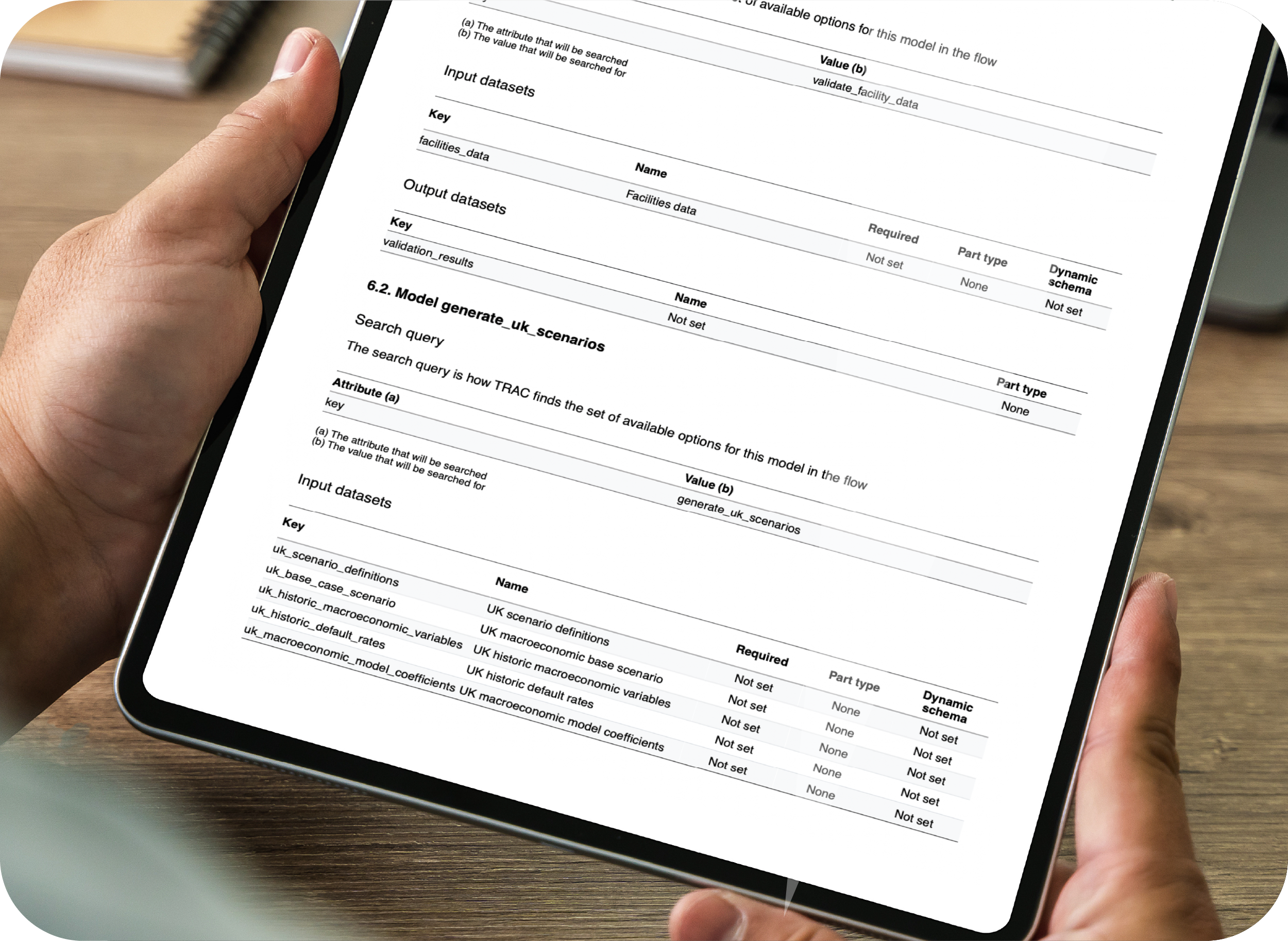
Governance-ready documentation for lineage, model deployment, internal audit, and execution oversight is generated automatically from calculation metadata and the execution contract.
No more manual evidence collation, offline attestation, and reconstructions needed.
See how intrinsic governance would work for
Understand how to deliver auditable, reproducible, self-documenting calculations on your existing stack.