
Self-describing models
A universal model API
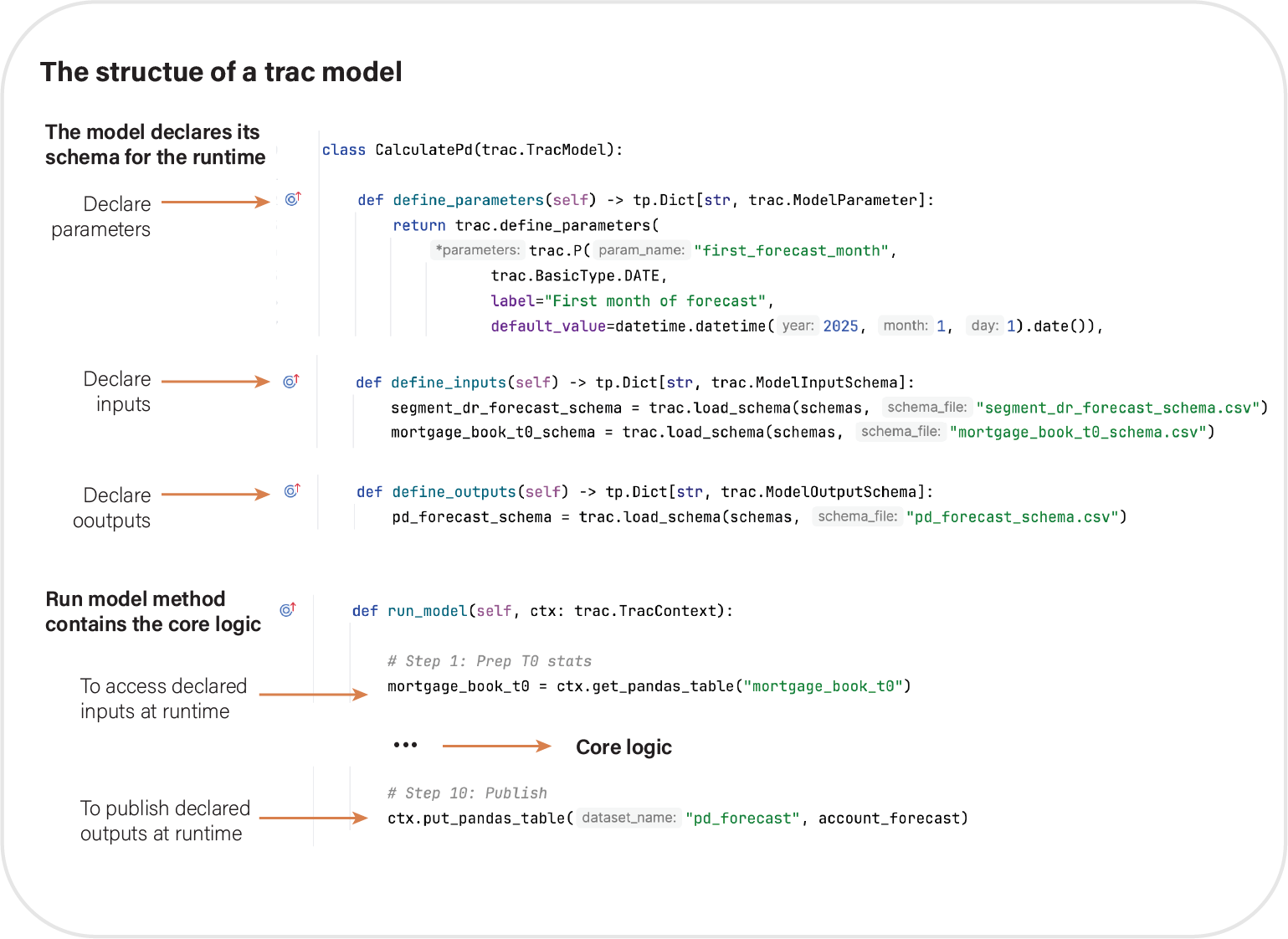
Models declare their schema’s (inputs, outputs, parameters) and the trac runtime guarantees the model always receives appropriate inputs wherever it runs - handling data marshalling outside the model code, so developers can focus on model logic.
Portable runtime
Code runs in any environment
The trac runtime is an open-source Python package that can be deployed in any modern IDE, notebook, or other execution environment, as well as in the trac platform.
It handles all interactions with the data and compute layer, so model code behaves consistently across environments — without rework.

Automated deployment
A clean path from development to production
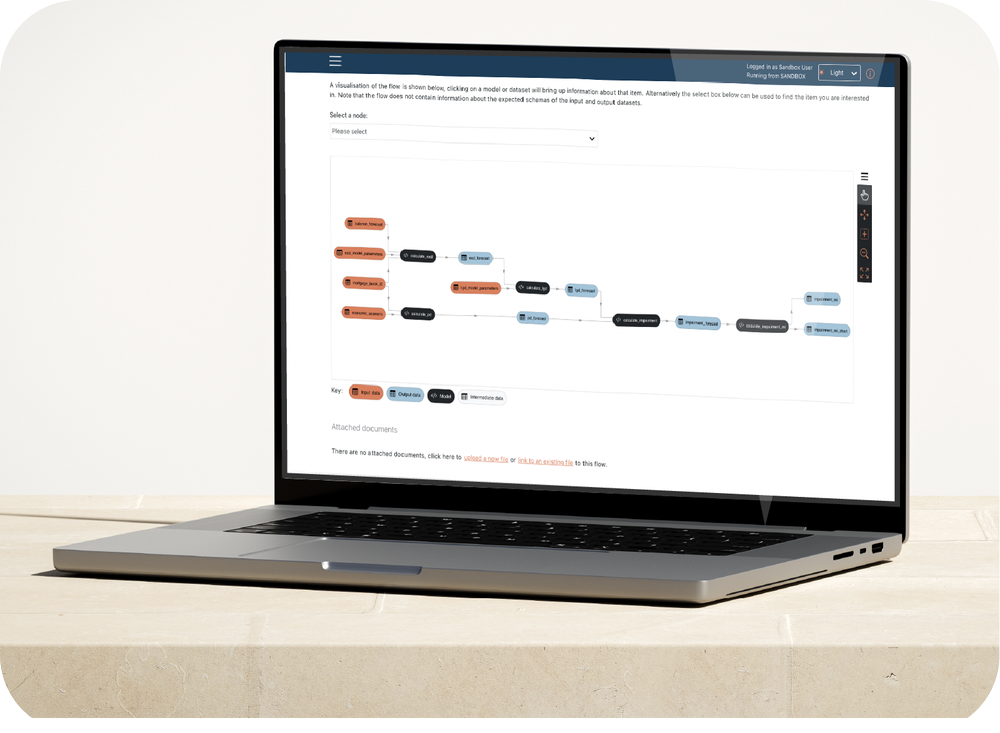
Models can be imported to trac from a code repository and deployed into executable workflows (Flows) using a seamless no-code interface.
No environment configuration, manual wiring, or code adjustement is required to go from development to production.
See trac in practice
Explore how this would work in your data and analytics stack